

How to Choose the Right Knee Brace
Choosing the right knee brace depends on more than just where your knee hurts. Your symptoms, activity level, and the type of support your knee needs all play a role in choosing the best option.
Knee pain can make everyday activities feel harder than they should. Walking the dog, climbing stairs, exercising, or even standing for long periods may suddenly become uncomfortable. If your knee feels swollen, unstable, stiff, or painful during activity, you may be wondering whether a knee brace could help.
The answer depends on what is causing your symptoms.
According to the American Academy of Family Physicians, knee pain affects approximately 25% of adults and is one of the most common musculoskeletal complaints seen in primary care.
Because knee pain can result from instability, overuse, cartilage damage, tendon irritation, or injury, different types of knee braces are designed to provide different levels of support.
Not all knee braces work the same way. Some provide mild compression and support for soreness or swelling, while others are designed to stabilize the knee after a ligament injury or surgery.
For example:
- If your knee feels unstable or like it may "give out," a hinged brace may provide more support than a sleeve.
- If swelling appears after activity, a compression sleeve may improve comfort.
- If arthritis causes pain on one side of the knee, an unloader brace may help reduce pressure on the joint.
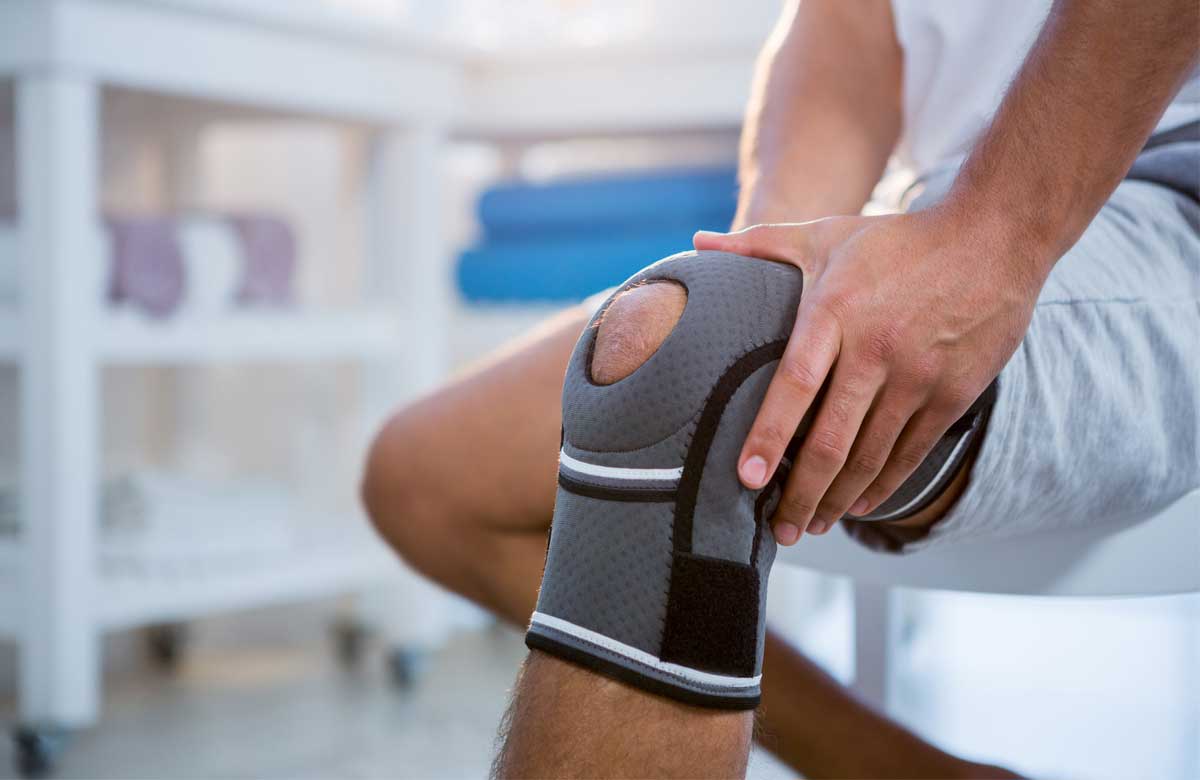
Do Knee Braces Actually Work?
Yes, knee braces can help support the knee and reduce discomfort in many situations. The effectiveness of a knee brace often depends on using the correct type of support for the underlying problem. A properly fitted brace may:
- Improve stability
- Reduce stress on injured tissues
- Provide compression for swelling
- Limit painful movement
- Improve confidence during activity
Many people use knee braces for:
- Knee osteoarthritis
- ACL or MCL injuries
- Meniscus tears
- Runner’s knee
- Patellar tendonitis
- Mild knee instability
- Recovery after surgery
However, a knee brace is not a cure for the underlying problem. Braces cannot heal torn ligaments, reverse arthritis, or replace strengthening exercises and physical therapy. In many cases, braces work best as part of a larger treatment plan.
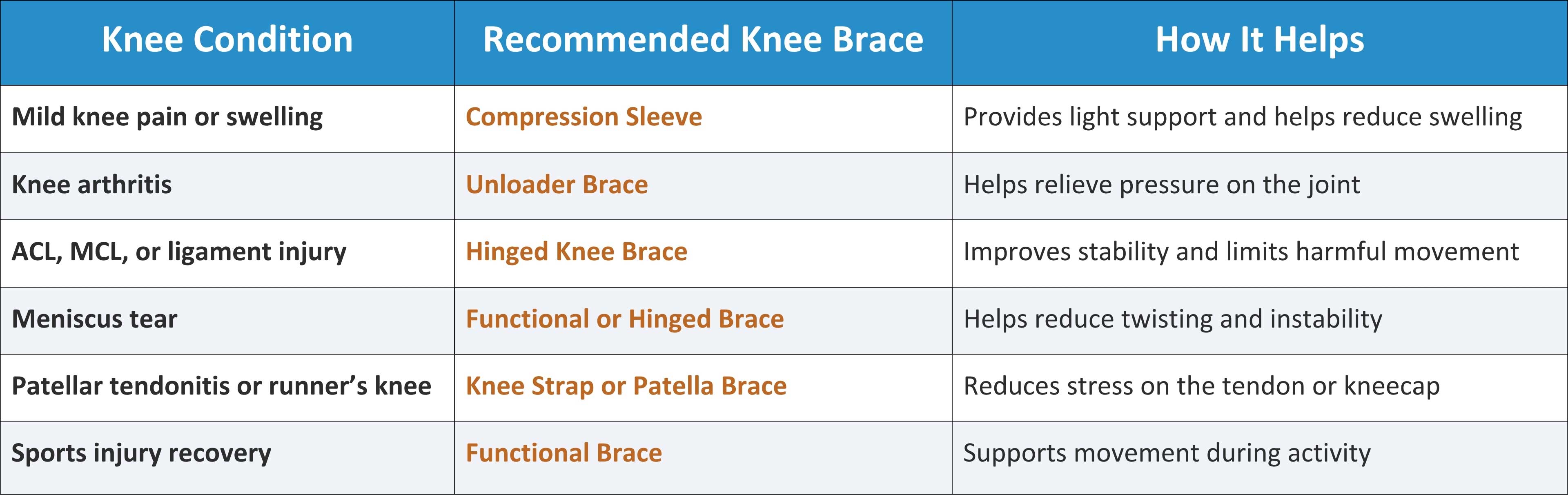
Quick Answer: What Knee Brace Do I Need?
Different knee conditions may benefit from different types of support. This quick reference chart outlines some of the most common knee brace recommendations and how they help support the joint.
The Main Types of Knee Braces
Some braces are designed for everyday support and mild symptoms, while others are intended for sports injuries, instability, or post-surgical recovery.
Compression Knee Sleeves
A compression knee sleeve is designed to provide mild support and gentle compression around the knee joint. Compression sleeves are commonly used to help reduce swelling, improve comfort during activity, and provide light support without significantly limiting movement.
They are commonly used for:
- Mild knee pain
- Swelling
- Early arthritis symptoms
- General support during activity
Compression sleeves are often a good option for mild symptoms. However, compression alone is usually not enough support for knees that feel unstable during activity or after ligament injuries. They typically do not provide enough stability for significant knee instability or more serious structural injuries.
Hinged Knee Braces
A hinged knee brace is designed to improve stability by limiting side-to-side movement in the knee. Hinged braces include reinforced supports along the sides of the joint and are commonly used after ligament injuries or when the knee feels unstable during activity.
These braces are often used for:
- ACL injuries
- MCL injuries
- Ligament sprains
- Knee instability
If your knee feels unstable, buckles unexpectedly, or feels like it may “give out,” a hinged brace may provide more support than a compression sleeve.
Unloader Knee Braces for Arthritis
An unloader knee brace is designed to reduce pressure on the damaged portion of the knee joint. These braces are commonly used for knee osteoarthritis, especially when arthritis affects one side of the knee more than the other.
By shifting weight away from the worn area of the joint, unloader braces may help improve comfort during walking, standing, and other daily activities.
Patella Stabilizing Braces and Knee Straps
Patella stabilizing braces are designed to help support the kneecap and improve patellar tracking during movement. Knee straps are designed to reduce tension on the patellar tendon, which may help relieve pain during running, jumping, or repetitive activity.
They are commonly used for:
- Runner's knee
- Patellar tendonitis
- Jumper's knee
- Kneecap tracking problems
Functional and Post-Surgical Knee Braces
Functional knee braces are designed to provide stability and support while allowing controlled movement during recovery and activity. These braces are often used after ligament injuries or surgery to help protect the knee while strength and mobility improve.
Post-surgical braces are typically more rigid and may include adjustable settings to control movement and protect healing tissues after procedures such as ACL reconstruction or other knee surgeries.
Knee Sleeve vs Knee Brace: What’s the Difference?
Many people use these terms interchangeably, but there is an important difference.
A knee sleeve is typically made from flexible, compressive material designed to provide mild support and reduce swelling. Knee sleeves are often used for occasional soreness, mild arthritis symptoms, or general support during activity because they allow full movement while adding light compression.
A knee brace is usually more structured and designed to provide additional stability and movement control. Braces are commonly used for ligament injuries, knee instability, post-surgical recovery, or conditions that require more support than a compression sleeve can provide.
In general, a knee sleeve may help with mild symptoms, while a structured knee brace is often more appropriate for injuries, instability, or recovery after surgery.
How to Choose the Right Knee Brace for Your Symptoms
Arthritis-Related Knee Pain
If arthritis causes stiffness, swelling, or pain while walking, an unloader brace may help reduce pressure on the affected side of the knee.
For milder arthritis symptoms, some people find that a compression sleeve provides enough support to improve comfort during daily activities.
Knee Pain While Running
Pain around the kneecap during running may be related to runner’s knee, tendon irritation, or kneecap tracking problems.
Patella stabilizing braces and knee straps may help reduce stress on the kneecap and surrounding tendon during activity.
Knee Instability or “Giving Out”
If your knee feels unstable, buckles unexpectedly, or shifts during movement, a hinged knee brace may provide additional support.
Recurrent buckling, shifting, or instability may indicate ligament damage or weakness in the structures that help stabilize the knee during walking, pivoting, or exercise.
Swelling After Activity
Mild swelling after activity may improve with compression and support from a knee sleeve.
Persistent swelling after activity may sometimes indicate cartilage damage, a meniscus injury, or ongoing joint irritation that deserves further evaluation.
Recovery After Injury or Surgery
Functional braces and post-surgical braces are often used during recovery from sports injuries or surgery.
These braces may help protect the knee while healing progresses and strength is rebuilt.
Signs Your Knee Brace Does Not Fit Properly
A knee brace should feel supportive and snug, but not painfully tight.
Your brace may not fit properly if you experience:
- Sliding or bunching
- Tingling or numbness
- Increased swelling below the brace
- Skin irritation
- Pain from pressure
- A feeling that the brace is not providing enough support
A poorly fitted brace may be uncomfortable and less effective.
Common Knee Brace Mistakes to Avoid
Choosing the correct brace is important, but how you wear and use it matters too. Some common mistakes may reduce support, increase discomfort, or delay recovery.
Wearing a Brace That Is Too Tight
A tighter brace does not always mean better support. Braces that are too tight may increase swelling, reduce circulation, or irritate nerves and skin.
Choosing the Wrong Type of Brace
Different knee problems require different types of support. A compression sleeve may not provide enough stability for ligament injuries or significant instability.
Using a Brace Instead of Treatment
Braces may help reduce symptoms, but they do not correct the underlying cause of knee pain. Strengthening exercises, physical therapy, injections, or other treatments may still be necessary.
Returning to Sports Too Quickly
Feeling better does not always mean the knee has fully healed. Returning to activity too soon may increase the risk of reinjury.
Wearing a Brace for Too Long Without Strengthening
Braces can support the knee during recovery, but long-term improvement often depends on rebuilding strength in the muscles surrounding the joint.
When a Knee Brace May Not Be Enough
While knee braces can help support the joint and reduce symptoms, some problems require a more complete evaluation and treatment plan.
You should consider seeing an orthopaedic specialist if you experience:
- Severe swelling
- Locking or catching sensations
- Difficulty bearing weight
- Recurrent instability
- Pain lasting more than a few weeks
- Worsening symptoms
- Sports injuries or falls
Many knee problems that seem minor at first can gradually worsen without proper treatment, especially when instability, swelling, or mechanical symptoms continue over time.
A brace may temporarily reduce symptoms while the underlying condition continues to worsen.
FAQs About Knee Braces
Can a knee brace weaken your knee?
In general, no. However, relying on a brace without strengthening the surrounding muscles may slow long-term improvement.
Can I wear a knee brace all day?
In some cases, yes. It depends on the type of brace, your symptoms, and your healthcare provider’s recommendations.
Should a knee brace be tight?
A brace should feel snug but not painfully tight. Tingling, numbness, or increased swelling may indicate that the brace is too tight.
Can I sleep in a knee brace?
Some people may sleep in a brace after surgery or injury, but this depends on the brace type and your physician’s recommendations.
Do compression sleeves actually help?
Compression sleeves may help reduce mild swelling, improve comfort, and provide light support during activity.
What knee brace is best for running?
Patella stabilizing braces and knee straps are commonly used for runner’s knee and tendon-related pain.
Can a knee brace prevent injury?
Some braces may help support the knee during sports or activity, but they cannot completely prevent injury.
Find the Right Treatment for Knee Pain
Knee pain can develop for many different reasons, including arthritis, ligament injuries, cartilage damage, tendon problems, and overuse injuries. While the right knee brace may help improve comfort and support movement, identifying the underlying cause of your symptoms is important.
The specialists at The Centers for Advanced Orthopaedics provide knee pain evaluation and treatment for patients throughout Maryland, Washington, D.C., and Northern Virginia. Whether you need physical therapy, injections, non-surgical care, or surgical treatment, our orthopaedic team can help create a personalized treatment plan designed around your condition and activity goals.