

5 Best Isometric Exercises for Orthopaedic Health
When you do isometric exercises, your muscles contract and produces tension without significantly changing length or moving the joint. Holding a plank, sitting against a wall or tightening your thigh muscles while keeping your leg still are all examples of isometric exercise.
Isometric exercises can be useful for building core strength and muscle endurance, improving muscle activation, supporting joint stability and helping people progress through rehabilitation after certain injuries or surgeries. They can also be useful when more complex exercises are temporarily uncomfortable or difficult to perform.
For people dealing with an orthopaedic injury or joint condition, the most important question is whether a specific isometric exercise is appropriate for your condition and where you are in the recovery process.

What Are Isometric Exercises?
An isometric exercise involves contracting a muscle without producing significant movement at the joint.
For example, when you sit in a chair with your leg straight, then tighten the muscles on the front of your thigh while keeping your leg still, then your quadriceps are working even though your knee isn't moving. This is an isometric contraction.
A plank works in a similar way. Your abdominal, back, hip and shoulder muscles are contracting to stabilize your body, but you're holding a position rather than repeatedly moving through it.
This is different from many traditional strengthening exercises, sometimes called dynamic or isotonic exercises, in which the muscles produce force while the body or joint moves.
Isometric exercises can be performed using your body weight, a wall, a resistance band, a weight or another stationary object.
What Are the Benefits of Isometric Exercises?
Isometric exercises have several potential benefits. Their usefulness depends on the exercise, the amount of resistance, how long the contraction is held and your specific goals.
1. They Can Improve Muscle Strength
Even though an isometric exercise looks like you're simply holding still, your muscles are actively producing force.
With appropriate resistance and progression, isometric training can help improve strength. However, strength improvements from isometric exercise can be specific to the position in which the exercise is performed. For that reason, isometric exercises are generally most useful when combined with other forms of strength training rather than used as the only type of exercise.
Building and maintaining skeletal muscle mass is important for all ages. Isometric exercises are helpful to reduce sarcopenia (muscle loss due to aging).
2. They Can Help Restore Muscle Activation
After an injury or surgery, a muscle may become weak or difficult to activate normally. Pain and swelling can interfere with the nervous system's ability to recruit the muscles around an injured joint.
Simple isometric contractions can provide an early way to begin activating those muscles again.
This is particularly relevant during knee rehabilitation. Isometric exercises may be used after ACL surgery to help restore quadriceps contraction when swelling and reduced muscle activation can make normal strengthening exercises more difficult.
3. They Can Strengthen Muscles Without Much Joint Movement
One of the most useful characteristics of isometric exercises is that they allow a muscle to work without repeatedly moving the joint.
That can make certain isometric exercises useful during rehabilitation when a patient is not yet ready for more demanding movements.
For example, someone recovering from a knee injury may begin with a quadriceps contraction before progressing to exercises that require the knee to repeatedly bend and straighten.
4. They May Help Manage Pain in Some Situations
Isometric exercise may provide short-term pain relief in certain musculoskeletal conditions. This does not mean that isometric exercise is a treatment for every type of pain.
The cause of pain matters. A tendon problem, arthritis, ligament injury and postoperative pain may all require different approaches.
Isometric exercises should be viewed as one potential component of treatment rather than a universal solution for joint or muscle pain.
5. They Can Improve Stability and Body Awareness
Many isometric exercises require you to maintain a controlled position while keeping several muscle groups engaged.
This can help develop muscular endurance, stability and awareness of how your body is positioned. These qualities can be important when returning to sports, exercise and everyday activities.
What Are the Best Isometric Exercises?
There is no single “best” isometric exercise. The right exercise depends on which muscles you are trying to strengthen, your current ability and whether you are recovering from an injury or surgery.
Here are five of the best isometric exercises for orthopaedic health:
1. Quadriceps Sets
Quadriceps sets are a simple isometric exercise often used during knee rehabilitation.
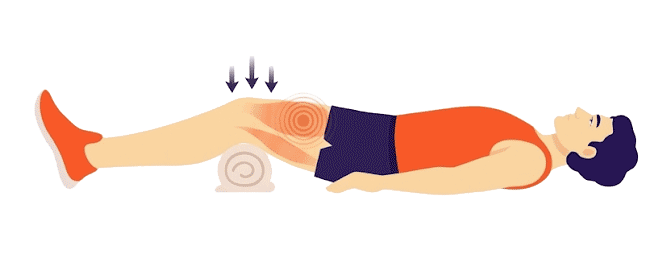 How to do a quadriceps set:
-
Lie down or sit with your leg extended.
-
Place a small rolled towel underneath your knee if recommended.
-
Tighten the muscles on the front of your thigh.
-
Gently press the back of your knee toward the surface beneath it.
-
Hold the contraction for several seconds.
-
Relax and repeat.
This exercise allows you to practice activating the quadriceps without repeatedly moving the knee.
Quadriceps activation can be particularly important after certain knee injuries and surgical procedures.
2. Wall Sit
A wall sit is a lower-body isometric exercise that primarily challenges the quadriceps while also involving the glutes and other muscles around the hips and legs.
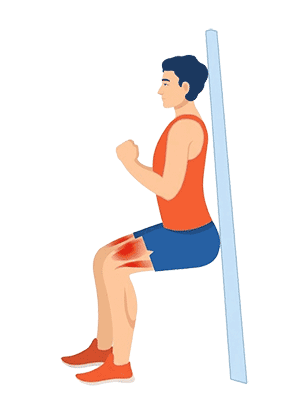 How to do a wall sit:
-
Stand with your back against a wall.
-
Place your feet comfortably in front of you.
-
Slowly slide your back down the wall.
-
Stop at a comfortable knee angle.
-
Hold the position while keeping your feet flat and your back against the wall.
-
Return to standing when you are finished.
You don't need to lower yourself into a deep squat to perform a wall sit. The appropriate position depends on your strength, mobility and any existing knee problems.
3. Plank
The plank is one of the most familiar isometric exercises. It primarily challenges the core muscles while also requiring the shoulders, hips and legs to help stabilize the body.
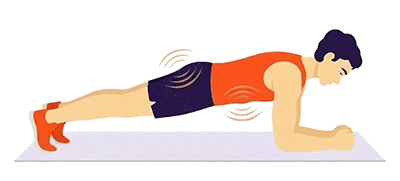 How to do a plank:
-
Begin on your hands and knees.
-
Extend your legs behind you or keep your knees on the floor for an easier version.
-
Brace your abdominal muscles.
-
Keep your body controlled rather than allowing your hips to sag.
-
Hold the position while maintaining good form.
If a floor plank is too difficult, try performing the exercise with your hands against a wall or countertop.
4. Glute Bridge Hold
A glute bridge hold works the muscles around the hips and core while requiring you to maintain a stationary position.
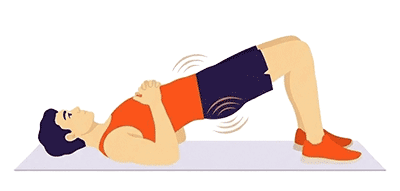 How to do a glute bridge hold:
-
Lie on your back with your knees bent.
-
Keep your feet flat on the floor.
-
Lift your hips from the floor.
-
Tighten your glutes and abdominal muscles.
-
Hold the position for several seconds.
-
Lower your hips in a controlled manner.
The exercise can be modified to make it easier or more challenging depending on your strength and rehabilitation goals.
5. Isometric Shoulder Rotation
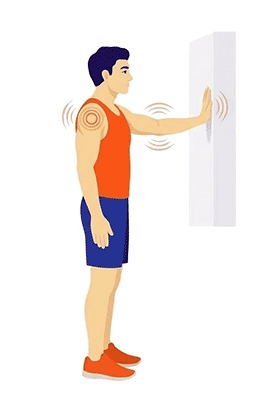 Isometric shoulder exercises can help strengthen muscles around the shoulder while limiting movement of the joint.
One example involves standing next to a wall with your elbow bent and gently pressing your hand against the wall without allowing your arm to move.
The direction of the contraction can be changed to target different shoulder muscles.
Because shoulder injuries can involve very different structures, including the rotator cuff, labrum and surrounding tendons, the appropriate exercise and position should be determined based on your individual condition.
Can Isometric Exercises Help With Knee Pain?
Isometric exercises may be useful for some people with knee pain, particularly when the goal is to strengthen the muscles surrounding the knee without repeatedly moving the joint.
Strengthening the quadriceps, hips and other supporting muscles can be an important part of many knee rehabilitation programs.
However, knee pain has many possible causes. Osteoarthritis, patellar tendinopathy, meniscus injuries, ligament injuries and other conditions may require different treatment approaches.
An exercise that feels appropriate for one person may not be appropriate for another. Persistent knee pain should be evaluated rather than simply treated with a generic exercise program.
Are Isometric Exercises Good for Shoulder Pain?
They can be useful for certain shoulder conditions because they allow the muscles to produce force without requiring large amounts of shoulder movement. For example, an isometric shoulder rotation may help activate the rotator cuff and other stabilizing muscles.
However, shoulder pain can result from many different problems, including rotator cuff injuries, tendinitis, bursitis, arthritis, instability and injuries to the labrum. The appropriate exercise depends on the underlying diagnosis.
If shoulder pain persists, becomes worse with activity or is accompanied by weakness or loss of motion, an orthopaedic evaluation can help determine the cause.
Can Isometric Exercises Help After Surgery?
In some cases, yes. Isometric exercises are frequently incorporated into rehabilitation because they can allow a patient to begin activating muscles without immediately performing more demanding dynamic movements.
For example, after ACL reconstruction, swelling around the knee can interfere with quadriceps activation. Isometric work can be used early in rehabilitation to help restore muscle contraction and awareness.
Similar principles may apply during rehabilitation following other orthopaedic procedures.
However, the fact that an exercise is isometric doesn't automatically make it safe after surgery. Surgical restrictions, tissue healing, weight-bearing limitations and the specific procedure all matter.
Always follow the exercise and activity guidelines provided by your orthopaedic surgeon and physical therapist.
Can Isometric Exercises Reduce Pain?
Isometric exercises may reduce pain temporarily in some musculoskeletal conditions.
It's important to understand the distinction between reducing pain temporarily and treating the underlying cause of pain.
If you have persistent pain, an orthopaedic specialist can determine whether the problem involves a tendon, ligament, cartilage, bone, joint or another structure and recommend appropriate treatment.
How Long Should You Hold an Isometric Exercise?
There isn't a universal hold time for every isometric exercise.
The appropriate duration depends on the exercise, the muscle being trained, your strength, the amount of resistance and whether you are exercising for general fitness or rehabilitation.
A beginner may start with a relatively short hold. A more experienced person may be able to maintain a contraction for 20, 30 or more seconds.
In rehabilitation, the recommended duration may be different altogether.
Rather than trying to hold an exercise for as long as possible, concentrate on controlled movement into the position, good alignment and maintaining the contraction without compensating with other muscles.
Should Isometric Exercises Hurt?
This is an important question. You may feel your muscles working, becoming tired or even shaking slightly during an isometric exercise. That can be normal.
Sharp, sudden or worsening pain is different.
Do not assume that more pain means an exercise is producing better results.
If an exercise causes significant pain, swelling, numbness, unusual weakness or symptoms that continue after you stop, discontinue the exercise and talk with your healthcare provider.
Anyone recovering from surgery or a significant injury should follow a personalized rehabilitation plan rather than starting exercises based solely on information found online.
Are Isometric Exercises Better Than Traditional Strength Training?
Not necessarily. Isometric and isotonic / dynamic exercises each have a place in a well-rounded strength and rehabilitation program.
Isometric exercises can be especially useful when you want to activate a muscle, build strength in a particular position, improve stability or temporarily limit joint movement.
Isotonic / dynamic exercises allow muscles and joints to work through a range of motion. They can be important for developing functional strength. Learn more about bodyweight exercises.
As rehabilitation progresses, a patient may move from simple isometric contractions to exercises that involve progressively greater movement, resistance and coordination.
In many cases, the goal is not to choose between isometric and isotonic exercise. It is to use the right type of exercise at the right stage of recovery.
Who Can Benefit From Isometric Exercises?
Isometric exercises can be useful for many people, including:
-
People recovering from certain orthopaedic injuries
-
Patients recovering from some types of surgery
-
People who need to rebuild muscle activation after a period of inactivity
-
Athletes returning to activity after injury
-
People looking to improve strength and stability
-
Individuals who temporarily have difficulty performing certain dynamic exercises
They can also be useful for healthy adults as part of a broader exercise routine.
However, an exercise program should always take into account your current fitness level, medical history, injuries and goals.
When Should You See an Orthopaedic Specialist?
Exercise can help many musculoskeletal problems, but persistent pain should not simply be ignored.
Consider seeing an orthopaedic specialist if you have:
-
Persistent joint or muscle pain
-
Swelling that does not improve
-
Weakness that affects normal activities
-
Limited range of motion
-
Pain following a significant injury
-
Difficulty returning to sports or exercise
-
Pain that continues despite rest and home treatment
If you're experiencing persistent joint pain, please contact a specialist at The Centers for Advanced Orthopaedics. Our doctors serve patients in Washington, D.C., Northern Virginia, and Maryland.
For urgent orthopaedic injuries call VantaStat at 844-VANTA365.
This article is intended for educational purposes only and should not be considered a substitute for professional medical advice, diagnosis or treatment. Always consult your physician or physical therapist before beginning a new exercise program, particularly if you have an injury, medical condition or are recovering from surgery.