

What Exactly is a Herniated Disc?
A herniated disc happens when one of the soft cushions between the bones of your spine becomes damaged and presses on nearby nerves. This can cause pain, numbness, or weakness. But it doesn't always require surgery or lead to long term problems. With the right care, many people recover well.
This guide explains what a herniated disc really is, the different types, common symptoms, treatment options, and what recovery often looks like. The goal is to help you understand what may be happening in your body and what steps come next.

How does a herniated disc happen?
Have you been diagnosed with a herniated disc, and you're dealing with back or neck pain that just doesn't seem to go away? It's normal to feel worried or confused. Many people hear the term and imagine something dramatic or permanent. The reality is a herniated disc is usually more manageable than it sounds.
A herniated disc can develop slowly over time or occur suddenly after an injury. One important and often overlooked cause is whiplash during a car accident. Even low speed collisions can force the spine to move violently back and forth, placing stress on the discs in the neck and lower back. This motion can weaken the outer layer of a disc or cause it to tear, allowing the inner material to push outward.
Because symptoms from whiplash related disc injuries may not appear right away, it is important to seek medical attention after a car accident, even if pain seems mild at first. Early evaluation can identify disc injuries before they worsen and help guide proper treatment.
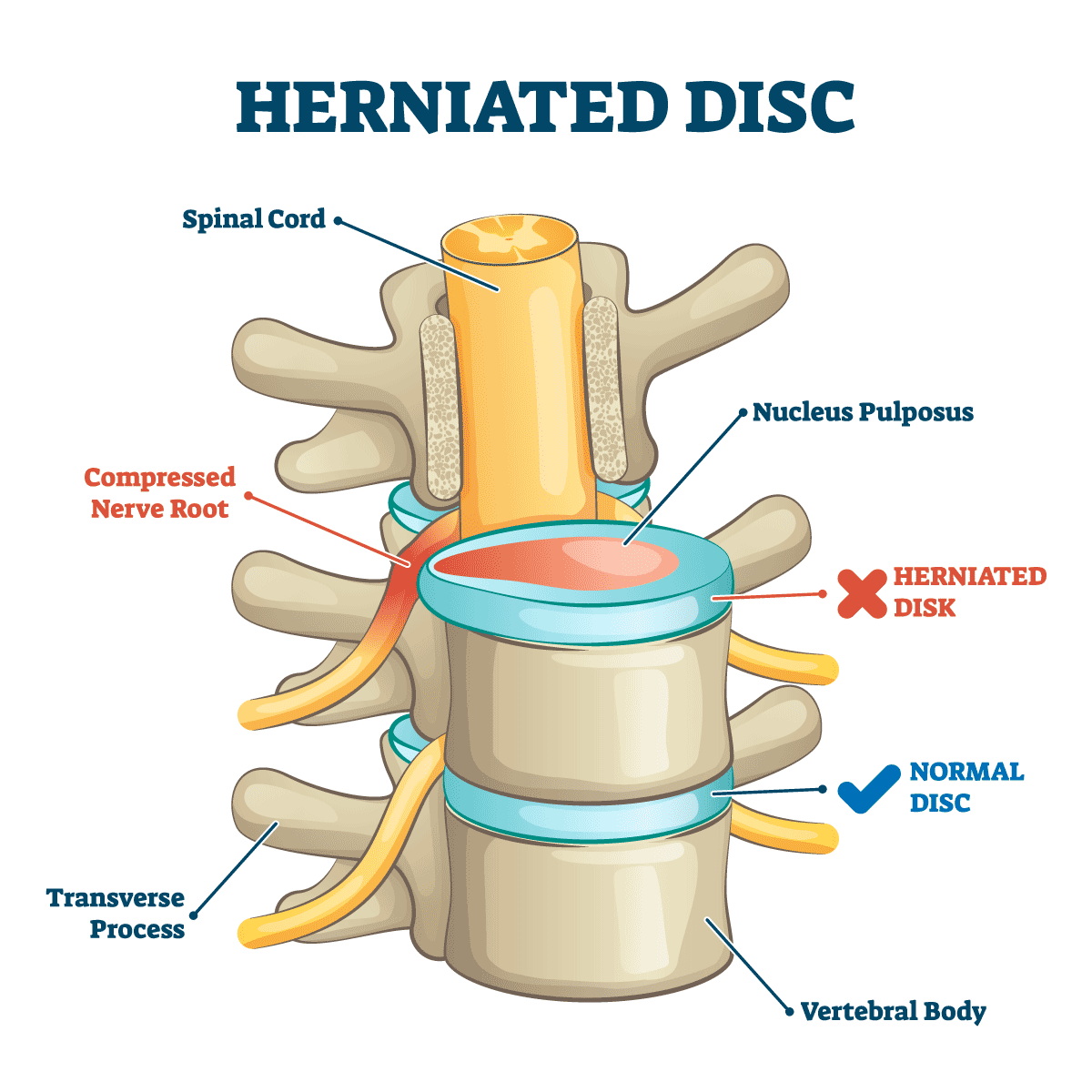
Your spine is made up of bones called vertebrae. Between each vertebra is a disc that acts like a shock absorber. Each disc has a tougher outer layer and a softer, gel like center.
A herniated disc occurs when the outer layer weakens or tears and the inner material pushes outward. When this bulge or rupture presses on a nerve, symptoms can begin. Our video shows a detailed view of a herniated disc.
Beyond accidents, herniated discs can also result from:
-
Normal wear and tear as we age
-
Repetitive bending, lifting, or twisting
-
A sudden injury or accident
-
Poor posture over time
-
Weak core or back muscles
Sometimes a herniated disc develops gradually. Other times it appears suddenly after lifting something heavy or moving the wrong way.
What are the different types of herniated discs?
Not all herniated discs are the same. The type often depends on how much of the disc has moved and where it is located in the spine.
Bulging disc
A bulging disc happens when the disc extends outward but the outer layer remains intact. It may not always cause symptoms. Many people have bulging discs without realizing it.
Protruded disc
In this case, the inner material pushes outward more noticeably but still stays connected to the disc. This type can cause nerve irritation and pain, especially with certain movements.
Extruded disc
An extruded disc means the inner material has broken through the outer layer. This is more likely to cause nerve compression and stronger symptoms.
Sequestered disc
This is the most advanced type. A piece of disc material breaks free and moves into the spinal canal. While it sounds alarming, even this type can often be treated without surgery depending on symptoms.
Location
Herniated discs are also described by location. The most common areas are:
-
Cervical spine, which affects the neck and arms
-
Thoracic spine, which affects the upper back and chest
-
Lumbar spine, which affects the lower back, hips, and legs
What symptoms does a herniated disc cause?
Symptoms depend on where the disc is and which nerves are involved. Some people feel mild discomfort. Others experience more noticeable pain or weakness.
Common symptoms include:
-
Back or neck pain that worsens with movement
-
Pain that travels into the arm, shoulder, leg, or buttock
-
Numbness or tingling in the hands, arms, feet, or legs
-
Muscle weakness
-
Pain when sitting, bending, or lifting
In the lower back, a herniated disc may cause sciatica, which is pain that travels down one leg. In the neck, symptoms may radiate into the shoulder or arm.
If you experience sudden weakness, loss of bladder or bowel control, or severe numbness in the groin area, seek medical care right away. These symptoms are rare but require urgent attention.
How is a herniated disc diagnosed?
Diagnosis usually starts with a conversation and physical exam. Your provider will ask about your symptoms, when they started, and what makes them better or worse.
Imaging may be used if symptoms persist or worsen. This can include:
-
X-rays to look at spinal alignment
-
MRI scans to see discs and nerves clearly
-
CT scans in certain cases
The goal is not just to see a disc issue on imaging, but to match it with your symptoms. Many people have disc changes that do not cause pain.
What treatments are available for a herniated disc?
Most herniated discs improve without surgery. Treatment focuses on reducing pain, calming inflammation, and restoring movement.
Nonsurgical treatments
Conservative care is often the first step and may include:
-
Activity modification and short periods of rest
-
Physical therapy to improve strength and flexibility
-
Anti-inflammatory medications
-
Pain relieving medications
-
Steroid injections to reduce nerve inflammation
Physical therapy plays a key role. Learning how to move safely and strengthen supportive muscles can relieve pressure on the disc and help prevent future issues.
When is surgery considered?
Surgery is usually reserved for cases where pain does not improve after several weeks or months of conservative care, or when nerve symptoms are worsening.
Common surgical options include removing the portion of the disc pressing on the nerve. Advances in surgical techniques mean many procedures are minimally invasive with shorter recovery times.
An orthopaedic or spine specialist can help determine whether surgery is necessary or if continued nonsurgical care is the better option.
What does recovery from a herniated disc look like?
Recovery varies from person to person and often depends on how quickly the injury is evaluated and treated. Disc injuries related to car accidents or whiplash may take longer to heal due to the sudden force involved. Many people notice improvement within a few weeks, while others may need several months of guided care.
Recovery varies from person to person. Many people notice improvement within a few weeks. Others may take a few months to feel better.
During recovery, it is important to:
-
Stay active within recommended limits
-
Follow physical therapy guidance
-
Avoid movements that strain the spine
-
Maintain good posture
-
Build core and back strength gradually
Even after symptoms improve, ongoing exercise and healthy movement habits help protect the spine and reduce the risk of recurrence.
When should you see a specialist for a herniated disc?
If back or neck pain is interfering with your daily life, it is worth getting evaluated. This is especially true if symptoms began after a car accident, fall, or other traumatic event.
You should seek medical attention if:
-
Pain lasts longer than a few weeks
-
Symptoms are worsening instead of improving
-
Pain travels into the arms or legs
-
You notice numbness, tingling, or weakness
-
Symptoms began after a car accident or whiplash injury
Early care can help confirm the diagnosis, rule out serious conditions, and create a treatment plan that supports long term spine health. Not sure if you should go to the ER or urgent care? Contact VANTASTAT to get access to orthopaedic urgent care.
Get expert care for a herniated disc
A positive outcome after a herniated disc injury often depends on getting the right diagnosis and a treatment plan that is tailored to your symptoms, lifestyle, and goals. CAO provides specialized musculoskeletal care for patients across Maryland, D.C., and Northern Virginia. Our orthopaedic and spine specialists use advanced imaging and evidence based treatments, including physical therapy and nonsurgical options, to address disc related pain and nerve symptoms.
If you're experiencing ongoing neck or back pain, numbness, or weakness from a suspected herniated disc, contact The Centers for Advanced Orthopaedics can help guide you toward a safe and effective recovery plan.
Key takeaways
-
A herniated disc occurs when disc material presses on nearby nerves
-
There are different types, ranging from mild bulges to more advanced ruptures
-
Symptoms depend on the location and severity of nerve involvement
-
Most herniated discs improve with nonsurgical treatment
-
Early evaluation and proper care can lead to better outcomes
Frequently asked questions about herniated discs
Can a herniated disc heal on its own?
Yes. Many herniated discs improve over time as inflammation decreases and the body adapts. Guided treatment can speed recovery and reduce pain.
How long does a herniated disc take to heal?
Some people feel better in a few weeks. Others may take several months depending on severity, activity level, and treatment approach.
Is walking good for a herniated disc?
In many cases, walking is helpful. It promotes circulation and movement without placing too much stress on the spine. Your provider can recommend safe activities for your situation.
Will I need surgery for a herniated disc?
Most people do not need surgery. It is typically considered only if symptoms persist or nerve damage is progressing.
Can a herniated disc come back?
It is possible. Maintaining strength, flexibility, and good posture reduces the risk of future disc problems.