

Ladder Safety Tips During the Holiday Season
'Tis the season to hang decorative lights on the eaves of your home. While you're at it, you might be inclined to trim the hedges or clean out the leaves from the rain gutters. Many of these seasonal projects involve climbing up and down a ladder. While it may seem like a routine household task, using a ladder without proper precautions could lead to a serious injury.
A fall from even a relatively short height can result in a broken wrist, shoulder injury, elbow fracture, or hip fracture. These injuries can affect mobility, independence, and everyday activities long after the initial accident.
Whether you're cleaning gutters, trimming tree branches, putting up outdoor lights, or decorating your home for the holidays, taking a few extra safety precautions can help reduce your risk of falling.
Ladder Falls are a Common Cause of Home Injuries
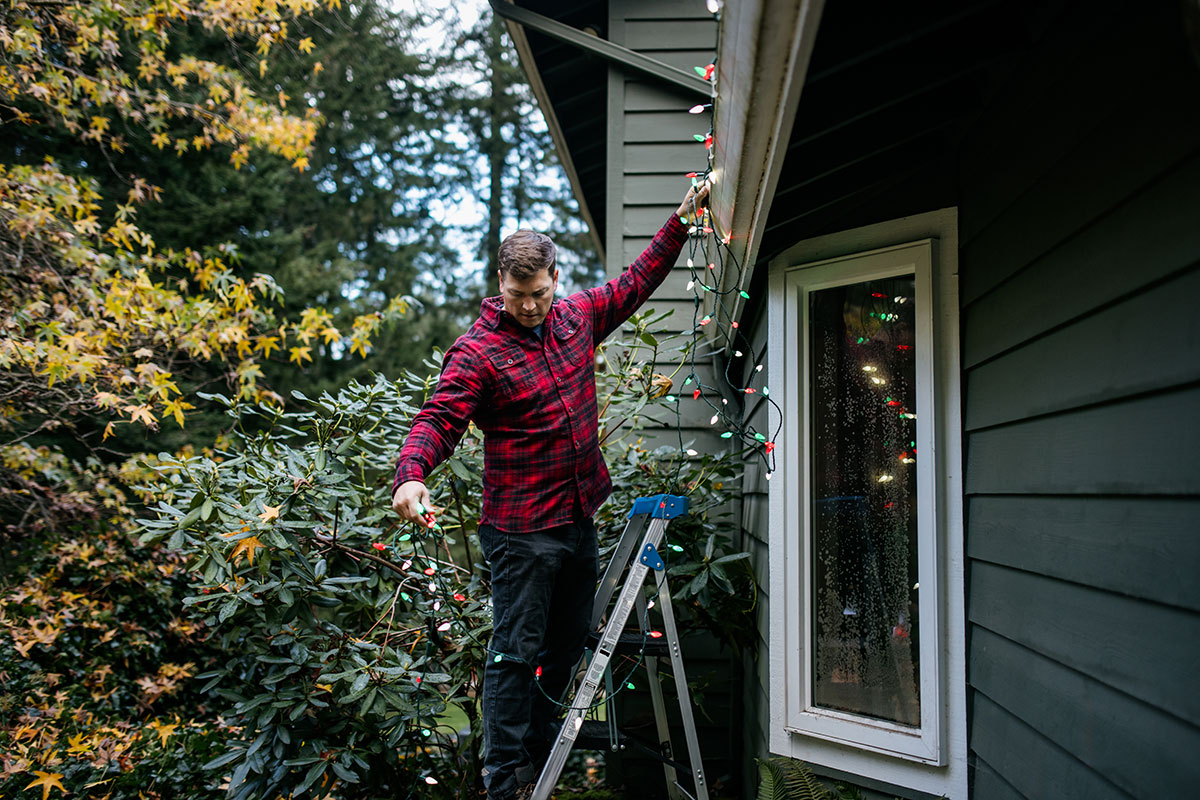
Ladders are useful tools, but they can become risky when they're used incorrectly or placed on uneven surfaces. Some people underestimate the risks because climbing a ladder is something they have done regularly throughout their lives.
According to the American Academy of Orthopedic Surgeons, about 500,000 people are treated for ladder-related injuries every year. The Consumer Product Safety Commission reported that there are approximately 160 decorating-related injuries each day during the holiday season, and nearly half of the injuries involving falls.
Some of the most common activities associated with ladder-related accidents include:
-
Hanging holiday lights and outdoor decorations.
-
Cleaning gutters and removing leaves from rooflines.
-
Trimming tree branches and shrubs.
-
Painting walls, ceilings, and exterior surfaces.
-
Reaching high shelves or storage areas.
-
Installing or repairing outdoor fixtures.
In Northern Virginia, Maryland, and Washington, DC, fall weather can create additional hazards. Wet leaves, rain, uneven ground, and cooler temperatures can make ladder placement and footing more difficult.
What may begin as a simple weekend project can quickly turn into a trip to the emergency room.
What Types of Orthopedic Injuries Can Result From a Ladder Fall?
A ladder fall can cause injuries ranging from minor bruises and sprains to serious fractures requiring surgery. The severity often depends on the height of the fall, the position of the body during impact, and the surface a person lands on. Some of the most common orthopedic injuries include:
Wrist fractures: People instinctively reach out with their hands when falling. This can put tremendous force on the wrist, resulting in a fracture. A broken wrist may require a cast, splint, or surgery, depending on the severity.
Shoulder injuries: Landing directly on the shoulder or reaching out to break a fall can cause shoulder fractures, dislocations, or injuries to the rotator cuff and surrounding soft tissues.
Elbow fractures: Falling onto an outstretched arm or directly onto the elbow can cause fractures that affect joint movement and arm function.
Hip fractures: A direct impact to the hip can result in a fracture, particularly in older adults. Hip fractures can be especially serious and may require surgery, hospitalization, and an extended period of rehabilitation.
Back and spinal injuries: A fall from a ladder can also cause injuries to the spine, including vertebral compression fractures.
Even when an injury doesn't initially seem serious, pain, swelling, bruising, or limited movement shouldn't be ignored. Some fractures and soft tissue injuries may not be immediately obvious.
How to Set Up a Ladder Safely
Proper ladder placement is one of the most important steps in preventing a fall. Before climbing, take a few minutes to make sure your ladder is appropriate for the job and positioned securely.
Follow these basic ladder safety guidelines:
-
Choose the right ladder. Use a ladder that is tall enough for the task without requiring you to stand on the top step or reach beyond the ladder's sides.
-
Inspect the ladder. Check for cracked steps, loose hardware, damaged rails, and worn or missing rubber feet.
-
Use a level surface. Place the ladder on firm, dry, and stable ground. Avoid soft soil, wet grass, gravel, and uneven surfaces.
-
Secure the ladder. Make sure the ladder cannot shift or slide while you are climbing.
-
Follow the manufacturer's instructions. Set up step ladders and extension ladders according to their intended use. For extension ladders, the recommended setup angle is approximately 75 degrees.
-
Avoid electrical hazards. Keep ladders away from overhead power lines and electrical equipment. Use a nonconductive fiberglass ladder when appropriate.
Never place a ladder on top of a box, chair, table, or other object to gain additional height. These makeshift arrangements can easily become unstable.
Ladder Safety Tips
Even when a ladder is positioned correctly, improper climbing habits can increase your risk of falling.
Keep these precautions in mind:
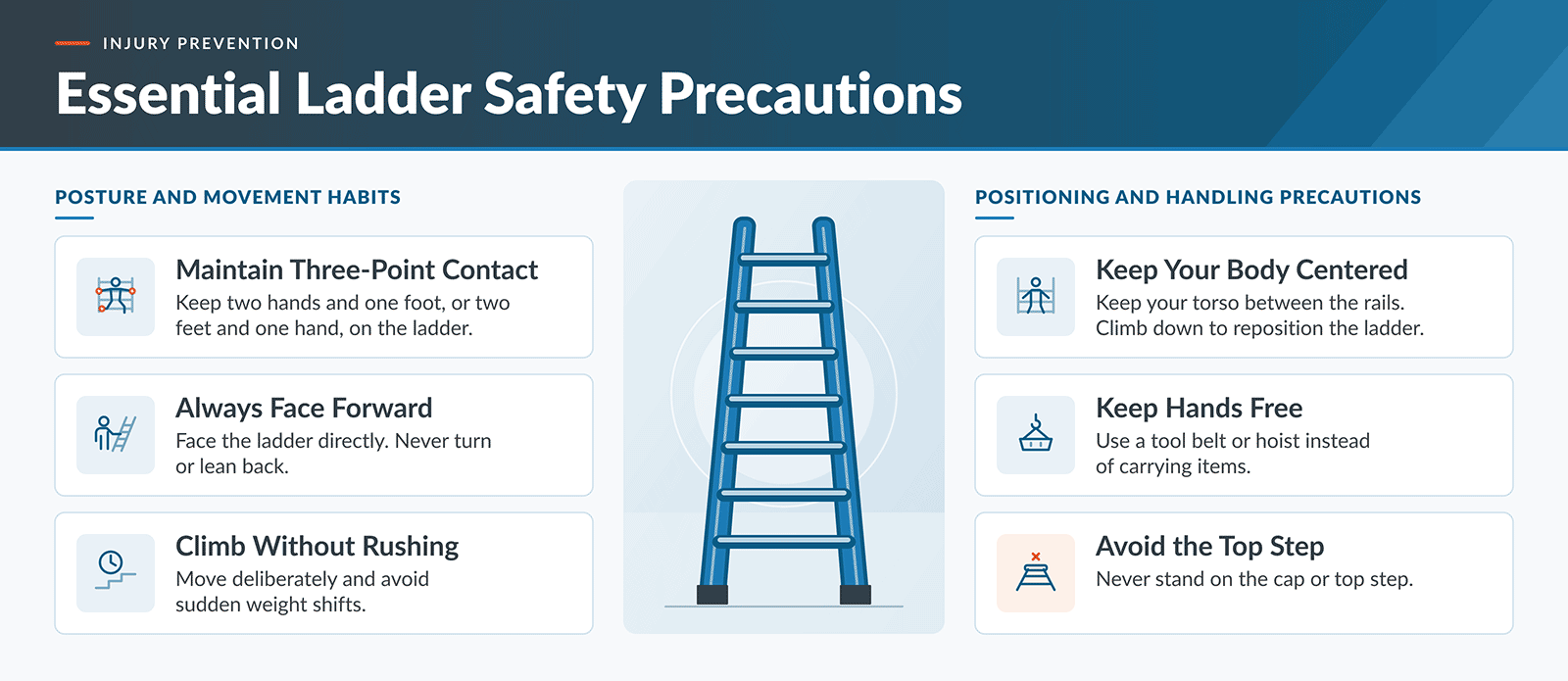
Maintain three points of contact. Keep two hands and one foot, or two feet and one hand, in contact with the ladder whenever possible. This helps maintain balance while climbing or descending.
Face the ladder. Always face the ladder when climbing up or down. Avoid turning around or leaning backward to reach something.
Stay centered. Keep your body between the ladder's side rails. If you cannot comfortably reach an area, climb down and reposition the ladder.
Never carry objects in your hands. Carrying tools, decorations, or other items while climbing makes it harder to maintain a secure grip. Use a tool belt or have someone hand items to you after you are safely positioned.
Avoid standing on the top step. Unless the ladder is specifically designed for that purpose, never stand on its top step or cap.
Do not rush. Take your time when climbing and descending. Avoid making sudden movements or shifting your weight unexpectedly.
These simple habits can make a significant difference in preventing a ladder-related accident.
How to Prevent Ladder Falls While Decorating for the Holidays
Holiday decorating is one of the busiest times of year for ladder-related accidents. Hanging lights along rooflines, decorating tall trees, and installing outdoor decorations often require reaching above shoulder height.
Before starting your holiday decorating, consider these precautions:
-
Check the weather forecast. Avoid climbing ladders during rain, strong winds, or icy conditions.
-
Wait until wet leaves have been cleared from the area where you plan to place your ladder.
-
Have another adult nearby to help stabilize the ladder and pass decorations or supplies.
-
Use outdoor-rated extension cords and lighting, and inspect them for damaged wires.
-
Avoid hanging decorations near power lines.
-
Use a ladder designed for outdoor use and appropriate for the height of your home.
-
Consider hiring a professional for roofline decorations or projects that require reaching difficult areas.
It's also important to recognize when a project is too risky to do yourself. If you need to lean over a roofline, reach an awkward corner, or climb higher than you feel comfortable, consider hiring someone with the proper equipment and experience.
A few extra decorations are never worth risking a serious injury.
What Should You Do If You Fall Off a Ladder?
If you or someone else falls from a ladder, take the situation seriously, even if there is no immediate sign of a major injury.
First, avoid rushing to get up. Moving too quickly after a fall could make certain injuries worse, particularly if there is a possible head, neck, back, or hip injury.
Seek emergency medical attention if there is severe pain, a visible deformity, significant bleeding, loss of consciousness, confusion, or an inability to stand or bear weight.
Even if you can move after the fall, watch for symptoms such as:
-
Pain or tenderness in the wrist, elbow, shoulder, or hip.
-
Swelling or bruising around a joint.
-
Difficulty moving an arm or leg.
-
Pain when putting weight on a foot or leg.
-
Persistent back or neck pain.
Do not assume that the absence of severe pain means there is no fracture. Some fractures may initially produce mild symptoms, particularly in older adults.
An orthopaedic evaluation can help determine whether an injury involves a fracture, dislocation, ligament damage, or another musculoskeletal condition. X-rays or other imaging tests may be necessary to establish an accurate diagnosis and determine the appropriate treatment.
When Should You See an Orthopaedic Specialist After a Ladder Fall?
Not every ladder fall results in a serious injury, but persistent pain or limited movement should be evaluated by a medical professional.
An orthopaedic specialist can diagnose and treat injuries affecting the bones, joints, muscles, tendons, and ligaments. Depending on the injury, treatment may include immobilization, medication, physical therapy, or surgery.
For older adults, recovering from a fall can be particularly challenging. A hip or wrist fracture may affect independence and make everyday activities more difficult. Prompt diagnosis and appropriate treatment can help support recovery and reduce the risk of long-term complications.
If you're experiencing persistent joint pain, please contact a specialist at The Centers for Advanced Orthopaedics. Our doctors serve patients in Washington, D.C., Northern Virginia, and Maryland.
Not sure if you should go to the ER or orthopaedic urgent care? Visit VantaStat or call 844-VANTA365.